AI Mushroom Farm Consultant

Starting a mushroom farm means navigating species selection, equipment costs, facility design, food safety regulations, and finding buyers — all at once. Dr. MycoTek gives you expert-level guidance 24/7 without the consultant fees.

Try Dr. MycoTek Free
Commercial mushroom grow kits from Nature Lion ready for fruiting in a small farm setup

The Problem

Professional mushroom farming consultants charge $100-300/hour, and most new growers can't afford regular access. Books and courses cover general principles but can't answer your specific questions about your space, budget, and local market. Facebook groups offer contradictory advice from strangers with unknown experience levels. Without reliable guidance, new farmers waste thousands on wrong equipment, wrong species, and preventable contamination.

How Dr. MycoTek Helps

Dr. MycoTek draws on comprehensive mushroom cultivation knowledge to answer specific questions about your operation. Whether you're converting a basement into a grow room, choosing between oysters and shiitake for your market, or troubleshooting a sudden contamination outbreak, you get detailed, actionable answers in seconds.

Why Mushroom Farming Is Booming in North America

The specialty mushroom market in North America has grown by over 15% annually for the past five years, driven by rising consumer demand for locally grown, organic, and functional foods. Restaurant chefs increasingly feature gourmet varieties like lion's mane, king oyster, and maitake on their menus. Health-conscious consumers seek out mushroom-based supplements, coffees, and extracts. Meanwhile, the barrier to entry remains remarkably low compared to other agricultural businesses — you can start a productive mushroom farm in a spare room or garage with less than $2,000 in equipment. This combination of growing demand and low startup costs makes mushroom farming one of the most accessible agricultural businesses for new entrepreneurs.

The Economics That Make Mushrooms Unique

Mushroom farming economics differ fundamentally from traditional agriculture. Instead of needing acres of land, mushrooms produce vertically — a single 300-square-foot room with four tiers of shelving provides 1,200 square feet of growing space. Production cycles are measured in weeks, not months or seasons — oyster mushrooms go from inoculation to harvest in 3-4 weeks, compared to 90+ days for most vegetable crops. Revenue per square foot can reach $20-40 annually depending on species, which dramatically outperforms field crops. Substrate costs are low (straw, sawdust, and coffee grounds are common base materials), and energy costs are manageable because most species fruit at ambient or slightly controlled temperatures. The primary cost is labour — substrate preparation, inoculation, harvesting, and sales require consistent daily attention.

Choosing Your First Species: The Decision That Shapes Everything

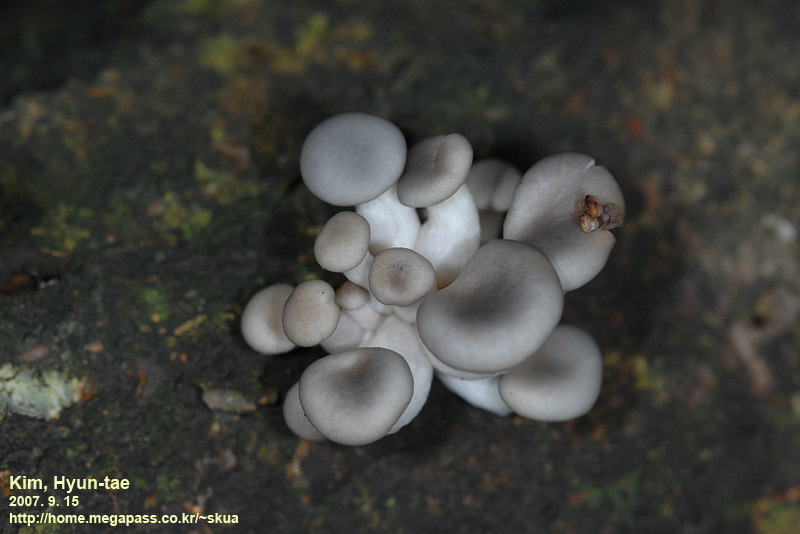
Your choice of species determines your equipment needs, growing conditions, production timeline, target market, and profitability. Blue oyster mushrooms (Pleurotus ostreatus var. columbinus) are the overwhelming recommendation for beginners: they tolerate a wide range of temperatures (10-24 degrees Celsius), colonize substrate aggressively (reducing contamination risk), produce multiple flushes, and sell reliably at $12-16 per pound at farmers markets. Pink oysters are faster but require warmer temperatures (18-30 degrees Celsius). Shiitake (Lentinula edodes) command higher prices ($14-20 per pound) but require supplemented sawdust substrate, longer incubation (8-12 weeks), and more precise environmental control. Lion's mane (Hericium erinaceus) is the premium option at $15-25 per pound but demands high humidity (95%+) and clean air.

Facility Design Fundamentals

Every mushroom farm, regardless of size, needs three functionally separate zones. The clean zone is where inoculation happens — substrate meets spawn in the cleanest environment you can create, from a still air box for beginners to a laminar flow hood for serious operations. The incubation zone is dark, warm (24-27 degrees Celsius for most species), and requires minimal intervention — colonizing bags or blocks sit undisturbed for 2-12 weeks depending on species. The fruiting zone is the most environmentally controlled area, requiring 85-95% relative humidity, fresh air exchange (4-8 air changes per hour), indirect light (12 hours per day), and cooler temperatures (15-21 degrees Celsius for most species). Many beginners try to do all three in one room, which invariably causes contamination. Even a simple plastic sheet partition between zones makes a significant difference.

Understanding Contamination: The #1 Farm Killer

Contamination — primarily from Trichoderma (green mould), Penicillium, Aspergillus, and various bacteria — is the single biggest reason mushroom farms fail in their first year. Contamination rates below 5% are excellent, 5-10% is normal for small operations, and above 15% indicates a systemic problem that will make your farm unprofitable. The sources are predictable: inadequate sterilization or pasteurization of substrate, poor inoculation technique, contaminated spawn, or environmental spore loads in the growing area. Prevention is always more effective than treatment — invest in proper substrate preparation, maintain clean work habits, and quarantine any contaminated bags immediately. A contaminated bag left on the shelf releases millions of spores that infect neighbouring bags.

Sales Channels: Where the Money Actually Comes From

New mushroom farmers typically sell through three channels, each with different pricing, consistency, and effort requirements. Farmers markets offer the highest per-pound prices ($12-20) and direct customer relationships, but require your physical presence for 4-8 hours per market day, plus booth fees ($50-200 per market). Restaurant sales provide consistent weekly volume at wholesale prices (60-70% of retail) and are the backbone of most successful small farms, but require relationship building and absolute delivery reliability. Online or CSA (Community Supported Agriculture) sales offer predictability through subscription models but require cold-shipping logistics. Most profitable small farms use a combination: restaurants for baseline volume and farmers markets for premium pricing and brand building.

The Regulatory Landscape in Canada

In Canada, selling fresh mushrooms at farmers markets or to restaurants typically requires minimal licensing — most provinces classify fresh, unprocessed mushrooms as exempt from food processing regulations. However, you may need a municipal business licence, farmers market vendor permits, and liability insurance (most markets require $2 million in general liability coverage). If you process mushrooms (drying, making extracts, or value-added products), provincial food processing regulations apply and may require an inspected kitchen. Each province differs: Ontario requires food premises registration for processed foods, BC has cottage food regulations, and Quebec has specific requirements for market vendors. Check your provincial and municipal requirements before your first sale.

How Dr. MycoTek Replaces a $200/Hour Consultant

Professional mushroom farming consultants charge $100-300 per hour and are worth every penny for specific, complex problems. But most questions new farmers have — species selection, equipment prioritization, contamination troubleshooting, fruiting parameter adjustment — follow well-established patterns that an AI can answer instantly. Dr. MycoTek provides unlimited access to cultivation knowledge for $2.99 per month, available at 2 AM when you are in the lab inoculating bags and notice something unusual. It cannot replace the hands-on experience of a consultant who visits your facility and spots a contamination source you have been missing, but it covers 90% of the questions new farmers face during their first two years of operation.

What You Get

Business planning: species selection, market analysis, revenue projections per square foot
Facility design: airflow, humidity, lighting, and contamination prevention for any space
Equipment recommendations: what to buy first, what to DIY, and what to skip
Troubleshooting: contamination diagnosis, yield optimization, environmental controls
Scaling guidance: when to expand, automation options, hiring your first employee
Sales channels: farmers markets, restaurants, grocery stores, online — pros and cons of each

See It In Action

I have a 400 sq ft insulated garage and $5,000 to start. What species should I grow and what equipment do I need first?
Great starting point! For a 400 sq ft garage with $5K budget, here's my recommendation: SPECIES: Start with blue oyster mushrooms (Pleurotus ostreatus var. columbinus). They're the most forgiving for beginners, fruit in a wide temperature range (10-21°C), have fast turnaround (3-4 weeks seed to harvest), and sell well at $12-16/lb at farmers markets. PRIORITY EQUIPMENT (in order): 1) Humidity — ultrasonic humidifier + inkbird controller (~$150). You need 85-95% RH. 2) Fresh air exchange — inline fan + ducting with HEPA filter (~$200). CO2 buildup is the #1 beginner mistake. 3) Fruiting shelving — wire metro racks, 4-tier (~$300 for 4 units). 4) Substrate prep — large pot or barrel for pasteurization (~$100). 5) Bags + supplies — poly tubing, impulse sealer, spawn (~$500). Skip the flow hood for now — you can do still air box (SAB) inoculation for ~$20. That leaves ~$3,700 for your first few months of spawn, substrate (straw is cheapest), and packaging. Expect your first harvest within 5-6 weeks of setup.

Frequently Asked Questions

How much money do I need to start a mushroom farm?
You can start a hobby-scale operation selling at one farmers market for $500-1,000. A serious small commercial operation (50-100 lbs per week) typically requires $3,000-5,000 for equipment, initial spawn and substrate, and first-month operating costs. A full-scale commercial farm (200+ lbs per week) with proper environmental controls, flow hood, and dedicated facility typically requires $10,000-25,000. These figures assume you are retrofitting existing space (garage, basement, shipping container), not building from scratch. The most common financial mistake is overspending on equipment before proving you can sell consistently.
Can I grow mushrooms as a side business while keeping my day job?
Yes, and this is how most successful mushroom farms start. At 20-30 lbs per week, mushroom farming requires approximately 10-15 hours per week — manageable alongside full-time employment if you structure your workflow efficiently. Inoculation and substrate prep can be batched on weekends, daily tasks (misting, harvesting) take 30-60 minutes, and farmers market selling is typically one weekend morning per week. Many growers operate at this scale for 6-12 months to build skills, establish sales channels, and confirm demand before committing to full-time farming.
What species is most profitable for small-scale farming?
Lion's mane typically offers the highest per-pound return ($15-25 retail), but oyster mushrooms are more profitable for beginners when you factor in ease of growing, faster production cycles, lower contamination rates, and broader market demand. A realistic first-year comparison: blue oysters might earn $25 per square foot annually with a 5% contamination rate, while lion's mane might earn $35 per square foot but with a 15% contamination rate and slower turnover. For most new farmers, starting with oysters and adding lion's mane as a second species after 6 months is the optimal strategy.
Do I need a licence to sell mushrooms in Canada?
For selling fresh, whole mushrooms at farmers markets or directly to restaurants, most Canadian provinces do not require a food processing licence — fresh mushrooms are classified similarly to fresh produce. You will typically need a municipal business licence ($50-200 annually), farmers market vendor registration, and general liability insurance ($500-1,500 annually for $2 million coverage). If you dry, process, or create value-added products from your mushrooms, provincial food safety regulations apply and you may need an inspected processing facility. Requirements vary by province, so contact your local public health unit for specific rules.
12M+
Words of Knowledge
80+
Species Database
4,400+
Reference Photos
24/7
Always Available

Ready to Get Expert Help?

Dr. MycoTek is free to start. No credit card required.

Trained on 12 million words of real grower knowledge. 80+ species. 4,400+ reference photos.

Try Dr. MycoTek Free