Fall Mushroom Foraging Guide
September through November is peak mushroom season across North America. Cooler temperatures, morning dew, and autumn rains create perfect conditions for dozens of prized edible species.
Start with a photo. No account needed until you want to save or publish your record.
Or jump into the live tools
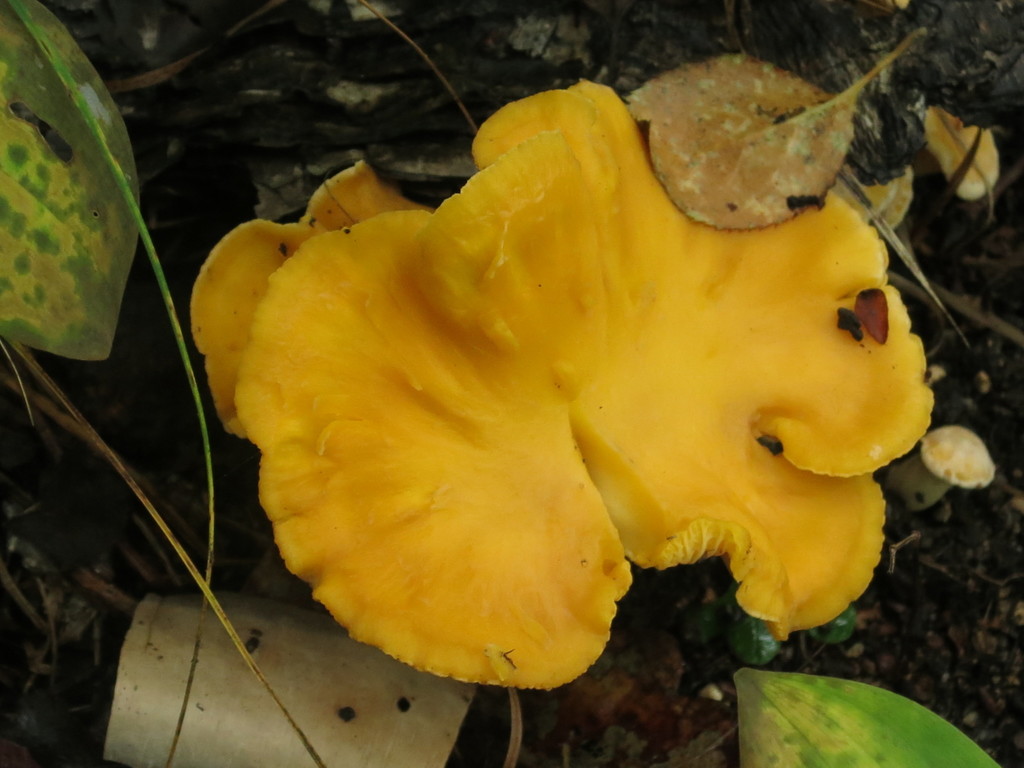
© repta (iNaturalist, cc-by)
Why Fall Is Peak Mushroom Season
September through November produces more edible mushroom species than any other season in North America. The combination of cooling air temperatures, shortening days, morning dew, and autumn rains creates ideal conditions for fruiting. Soil that has been warmed by summer retains enough heat for mycelial activity, while cooler air temperatures trigger many species to fruit as a survival response before winter. In a typical fall season in southern Ontario or British Columbia, an experienced forager might encounter 50-100 different species on a single productive walk through mixed hardwood-conifer forest. This diversity is both the excitement and the danger of fall foraging — more species means more potential for confusion between edible and toxic look-alikes.
Hen of the Woods (Maitake): The Prize of October
Hen of the woods (Grifola frondosa), also known as maitake, is one of the most sought-after fall edibles. It appears from September through November at the base of oak trees — both living and recently dead — as a large rosette of overlapping grey-brown fan-shaped caps that can weigh 2-20 kilograms. The underside has tiny pores (not gills), and the flesh is white and firm when fresh. Its main look-alike, Berkeley's polypore (Bondarzewia berkeleyi), also grows at oak bases but has much larger, thicker individual caps and becomes tough quickly. Fresh maitake is outstanding sauteed in butter, roasted until crispy at the edges, or used in soups. It also dehydrates extremely well. Maitake is perennial — it will fruit in the same spot year after year, so guard your locations carefully.
Honey Mushrooms: Abundant but Challenging
Honey mushrooms (Armillaria species) are one of the most abundant edible mushrooms of fall, growing in massive clusters on dead and dying trees. They have tan to honey-brown caps, a white ring on the stem, and white spore prints. However, honey mushrooms are NOT a beginner species because they share habitat and superficial appearance with the deadly Galerina marginata (deadly Galerina), which also grows on wood in clusters and has a ring on its stem. The critical differences: Galerina has a rusty brown spore print (versus white for Armillaria), Galerina caps are smaller (2-4 cm versus 5-12 cm), and Galerina's ring is typically less prominent and ephemeral. A spore print is mandatory for any honey mushroom identification — white spores confirm Armillaria; brown spores mean Galerina. Never skip this step.
Lion's Mane: The Unmistakable Wild Edible
Lion's mane (Hericium erinaceus) is one of the easiest fall mushrooms to identify and has no dangerous look-alikes. It grows as a single, white, globular mass of cascading icicle-like teeth on dead or dying hardwoods, particularly beech, maple, and oak. Specimens range from fist-sized to larger than a basketball. It appears from late September through November, often returning to the same dead log for several years until the wood is fully decomposed. Other Hericium species (H. americanum, H. coralloides) have branching structures but are equally edible and safe. Lion's mane has gained significant attention for its potential cognitive health benefits, making fresh wild specimens particularly valuable — they sell for $15-25 per pound at farmers markets.
Giant Puffballs and Late-Season Gems
Giant puffballs (Calvatia gigantea) appear from August through October in fields, meadows, and forest edges. When young and fresh, the interior is pure white, firm, and homogeneous — this is the edible stage. Any discolouration (yellowish, greenish, or brownish interior) means the spores are developing and the puffball is past its prime. Always slice every puffball in half from top to bottom before eating — you are checking both for pure white flesh AND for the outline of a developing mushroom inside, which would indicate an immature Amanita egg (death cap in its button stage). Other late-season prizes include black trumpet mushrooms (Craterellus cornucopioides), which are small, dark, funnel-shaped, and grow in dense colonies on forest floors — they are one of the finest culinary mushrooms and are nearly impossible to confuse with anything dangerous.
Fall Foraging Safety: Managing Increased Risk
Fall's species diversity increases identification risk considerably. Death caps (Amanita phalloides) and destroying angels (Amanita bisporigera) fruit in fall in many regions, and they can appear near edible species in the same forests. The single most important fall safety practice is taking spore prints of every unfamiliar species. A white spore print with white gills, a ring, and a volva at the base means Amanita — do not eat. Cortinarius species, some of which contain the kidney-destroying toxin orellanine, are also common in fall — they typically have rusty brown spores and a cortina (cobweb-like veil) rather than a true ring. When in doubt, leave it. No meal is worth the risk.
Preserving Your Fall Harvest
Fall's abundance often produces more mushrooms than you can eat fresh, making preservation essential. Dehydrating works well for most species: slice to 5-6 mm thickness and dry at 55-65 degrees Celsius until crisp. Chanterelles are the exception — they become rubbery when dried and are better sauteed in butter and then frozen. Hen of the woods dehydrates beautifully and rehydrates well for winter soups. Lion's mane can be sliced, sauteed, and frozen, or torn into pieces and dried. Honey mushrooms should always be thoroughly cooked before preservation (they cause GI upset if undercooked). Vacuum sealing dried mushrooms extends shelf life to 2+ years. Label everything with species, date, and location — your future self will thank you.
Planning Your Fall Foraging Calendar
A productive fall season requires planning. In September, focus on chanterelles (still fruiting from summer), chicken of the woods (peak in many regions), and early hen of the woods. In October, shift to hen of the woods (peak month), honey mushrooms, lion's mane, puffballs, and black trumpets. In November, look for late oyster mushrooms, blewits (Lepista nuda — purple-tinged, but requiring positive ID), and turkey tail for medicinal use. Keep records of what you find, where, and when — over 3-5 years you will build a personal foraging calendar that predicts productive days with surprising accuracy based on weather patterns and past seasons.
What You Get
See It In Action

Real photos from the community
Commercial-use Creative Commons photos from Mushroom Observer.


Frequently Asked Questions
Related Topics
Put this guide into practice
Keep a useful record while the details are fresh.
Your records stay useful on their own; AI help is optional.
Start with a photo. No account needed until you want to save or publish your record.