Fuzzy feet on oyster mushrooms?
White fuzz on the stems can accompany limited fresh air, especially when stems are long and caps stay small. Check the whole grow before deciding what to change.
Three things to check first
- 1. Look at the shape. Photograph the fuzzy stems and caps together. Note whether the caps are opening or staying small.
- 2. Check the fresh air. Is the fruiting area enclosed? Follow your kit or chamber instructions for ventilation, and avoid a fan blowing directly on the mushrooms.
- 3. Keep moisture in balance. More ventilation can dry a grow. Make one modest change, keep following your kit’s misting instructions and compare a later photo.
Fuzz alone cannot rule out contamination or establish food safety.
Start with a photo. No account needed until you want to save or publish your record.
Photograph the whole cluster
Compare stem length and cap shape together. These Nature Lion reference photos show different grows, not a before-and-after treatment.
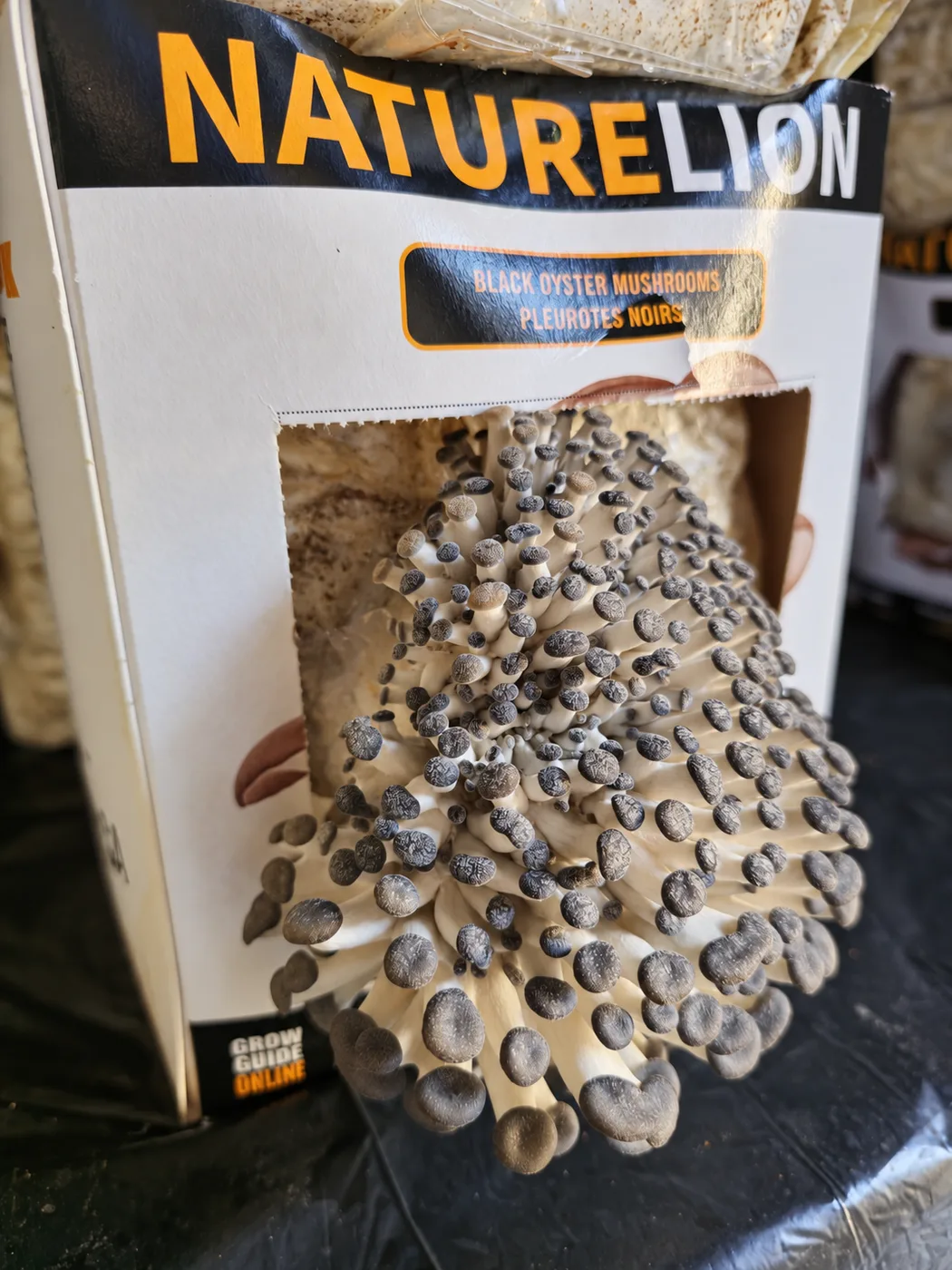
Include the stems, caps and kit opening so the growth pattern is visible.
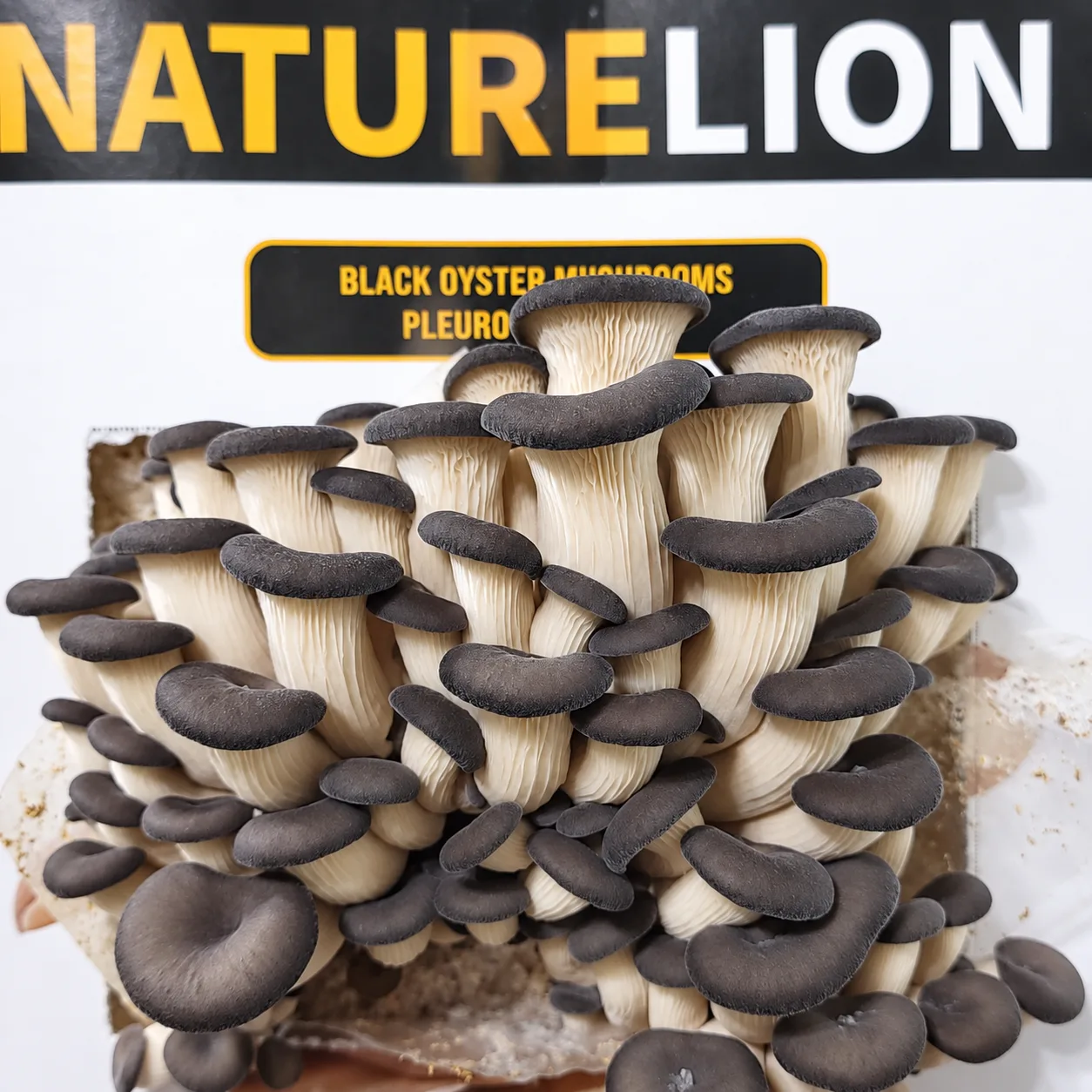
Record the whole cluster from a similar angle when you return to your own grow.
Photos from Nature Lion’s grow-kit gallery. The cause of either growth pattern was not measured; these photos cannot confirm a CO₂ problem or crop safety.
See how to turn photos into a useful grow journalWhy fresh air matters
Growing mushrooms release carbon dioxide. In an enclosed fruiting area it can build up, and oyster mushrooms may develop longer stems and smaller caps. Fresh-air exchange replaces that air. It is different from simply moving the same air around inside a closed container.
Avoid drying the grow while adding air
Fruiting mushrooms need moisture as well as ventilation. Opening a chamber more widely can change both conditions at once. Follow the instructions for your particular kit or setup, avoid direct drying airflow, and check the surface as you make adjustments. Commercial room targets are not a universal prescription for every home kit.
What to put in your first update
Photograph the stems and caps in the same frame. Add another view of the kit or fruiting space if useful. Note when the mushrooms started growing, how you provide fresh air and how you mist. If you already have a humidity or CO2 reading, record it; you do not need to buy a meter to start a photo journal.
Compare the next update
Write down the change you made and add a later photograph. Look at newly developing growth as well as the older cluster. Do not expect an existing stem to lose its shape immediately. A dated record helps you explain what changed when you ask for advice.
When the appearance does not fit
If you notice other unusual changes, describe them separately rather than labelling everything ‘fuzzy feet.’ A grow record can hold your observations without deciding what caused them. Optional AI guidance may help organize questions, but it does not certify a crop as safe to eat.
Sources and further reading
What You Get
See It In Action

Frequently Asked Questions
Related Topics
Put this guide into practice
Keep a useful record while the details are fresh.
Your records stay useful on their own; AI help is optional.
Start with a photo. No account needed until you want to save or publish your record.