Lion's Mane Not Forming Teeth

Your lion's mane is growing, but it looks like a smooth white blob instead of the cascading icicle-like teeth you expected. Dr. MycoTek diagnoses the humidity and environmental issues preventing proper spine development.

Try Dr. MycoTek Free
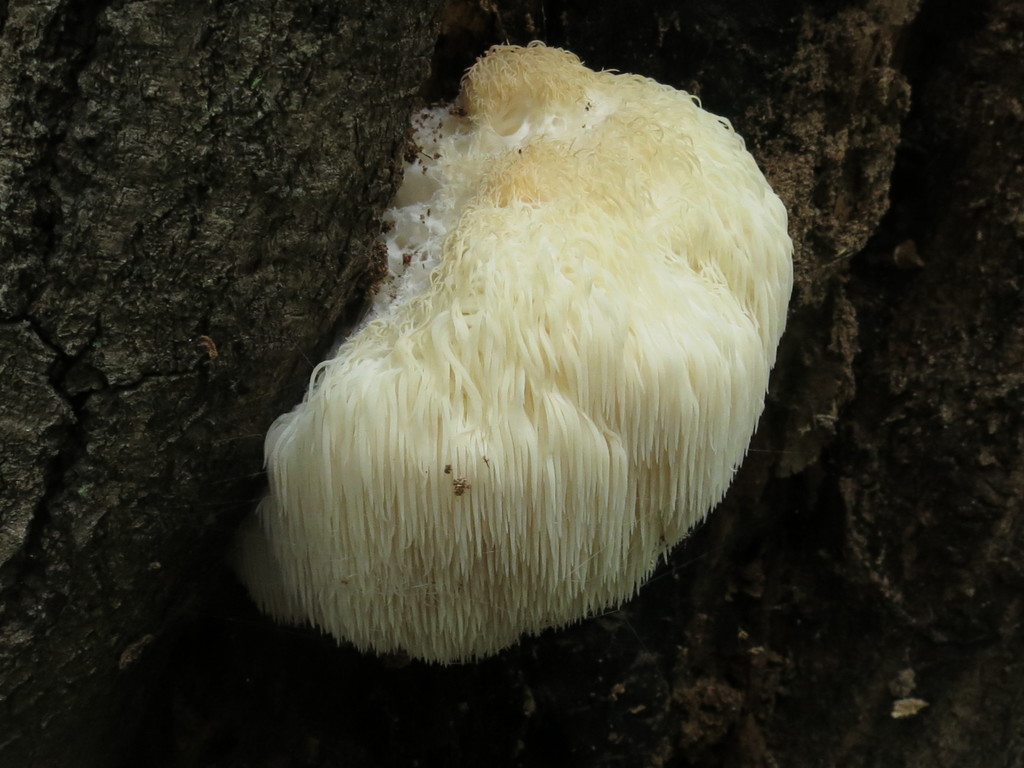
Close-up of lion's mane mushroom showing cascading white teeth forming properly in high humidity

The Problem

Your lion's mane primordia appeared and you got excited — but instead of forming beautiful cascading spines, it grew into a round, smooth, coral-like blob. Or the teeth started forming but turned yellow and dried out before reaching full length. Lion's mane is the most humidity-demanding species commonly grown at home, and most setups can't maintain the 90%+ humidity it needs without intervention.

How Dr. MycoTek Helps

Dr. MycoTek diagnoses lion's mane growth abnormalities by their specific appearance. Smooth blobs, stunted teeth, yellowing tips, and browning all point to different environmental issues. It gives you the exact humidity, temperature, and FAE parameters needed for each growth stage, plus practical solutions for maintaining them in a home environment.

Why Lion's Mane Is the Most Humidity-Demanding Species

Lion's mane (Hericium erinaceus) has a unique fruiting body morphology that makes it exceptionally sensitive to humidity. Unlike capped mushrooms that have a relatively small surface-area-to-volume ratio, lion's mane produces hundreds of thin, elongated teeth (spines) that each expose a large surface area to the surrounding air. These delicate structures lose moisture rapidly through evaporation. When relative humidity drops below 85 percent, the developing teeth dry out faster than the mycelium can supply moisture, resulting in stunted growth, browning tips, or the complete absence of teeth formation. The target humidity for lion's mane during fruiting is 90 to 95 percent relative humidity — significantly higher than the 85 percent minimum that most other gourmet species tolerate. This single requirement is responsible for the vast majority of lion's mane growing failures.

The Blob Stage: Normal Development vs. Problems

Lion's mane primordia initially appear as dense, white, cauliflower-like masses emerging from the substrate opening. This early stage naturally looks like a smooth blob or pom-pom, and it is entirely normal. The teeth develop later, typically 3 to 5 days after the initial primordia become visible. However, if humidity is too low, the fruiting body remains in this blob stage indefinitely — growing outward as a smooth, dense mass without ever producing teeth. This smooth blob is sometimes called 'coral-like' or 'brain-like' in appearance. If your lion's mane has been in the blob stage for more than 5 to 7 days without any sign of teeth developing, humidity is almost certainly too low. Increase humidity to 90 to 95 percent and you should see teeth begin to emerge within 2 to 3 days. The existing smooth growth will typically begin developing teeth from its outer surface.

Building a Humidity Chamber for Lion's Mane

Because of lion's mane's extreme humidity requirements, most home growers need a dedicated humidity chamber rather than relying on ambient room conditions or occasional misting. The simplest effective setup is a large clear storage bin (70 to 100 litres) with 4 to 6 holes (2 to 3 centimetres in diameter) drilled for fresh air exchange, each covered with micropore tape to slow moisture loss. Place the fruiting block inside on a small rack or inverted plate to keep it off the bottom. Mist the inside walls heavily 3 to 4 times daily, or install a small ultrasonic humidifier (reptile fogger) on a timer for 15 minutes every 2 hours. A digital hygrometer inside the chamber is essential for monitoring. For more advanced setups, a Martha tent (small greenhouse frame with plastic sheeting) connected to an ultrasonic humidifier via ducting provides excellent, hands-off humidity control for multiple blocks simultaneously.

Temperature and Light Requirements

Lion's mane fruits best at 15 to 22 degrees Celsius (59 to 72 degrees Fahrenheit), with the sweet spot for most strains being 18 to 20 degrees Celsius. Temperatures above 24 degrees Celsius can cause the fruiting body to develop faster but with poorer texture and reduced teeth formation. Below 13 degrees Celsius, growth slows dramatically. Unlike oyster mushrooms, lion's mane does not require a significant cold shock to trigger pinning — the transition from colonization temperatures (24 to 27 degrees Celsius) to fruiting temperatures (18 to 20 degrees Celsius) is generally sufficient. For light, lion's mane needs indirect ambient light for 8 to 12 hours daily to trigger and direct growth. Total darkness can cause malformed fruiting bodies that grow irregularly. A window with indirect light or a standard room light is sufficient — grow lights are unnecessary.

Yellowing and Browning: Diagnosis Guide

Colour changes in lion's mane are important diagnostic indicators. Light yellowing of the teeth tips is the earliest sign of drying — humidity has likely dipped below 85 percent intermittently. Increase humidity immediately and the new growth should remain white. Dark yellow to amber colouration across the entire fruiting body indicates aging — the mushroom is approaching maturity and should be harvested soon, as the flavour becomes bitter when the colour deepens. Brown spots or patches on an otherwise white fruiting body can indicate bacterial blotch, usually caused by water droplets sitting on the surface for too long. Mist the air around lion's mane rather than spraying directly onto the fruiting body. Pinkish-brown discolouration at the base where the fruiting body meets the substrate is common and generally harmless — it is caused by oxidation of metabolic byproducts.

Fresh Air Exchange: The Delicate Balance

Lion's mane needs fresh air exchange but is far less demanding than oyster mushrooms in this regard. While oysters need near-outdoor CO2 levels (below 800 ppm), lion's mane tolerates moderately elevated CO2 (up to 1500 ppm) without significant adverse effects. In fact, slightly restricted FAE can produce denser, more compact fruiting bodies with shorter teeth. However, if CO2 exceeds 2000 ppm, lion's mane may grow as elongated coral-like branches rather than forming a single dense pom-pom. The challenge is that increasing FAE to lower CO2 also reduces humidity — and humidity is non-negotiable for this species. The solution is controlled air exchange: small holes with micropore tape that allow slow gas exchange without rapid moisture loss, combined with a humidifier that maintains moisture levels despite the air movement.

Harvest Timing and Post-Harvest Care

Lion's mane should be harvested when the teeth are 1 to 2 centimetres long, fully formed, and still bright white. If the teeth turn yellow, the flavour shifts from sweet and crab-like to slightly bitter. To harvest, grip the fruiting body firmly at its base and twist gently — it should separate cleanly from the substrate. Do not cut with a knife if possible, as the remaining stump can become a site for contamination. After harvest, lion's mane is best used within 3 to 5 days when refrigerated. It does not hold up well to long storage compared to oyster or shiitake mushrooms. For preserving, slice and dehydrate at 57 degrees Celsius (135 degrees Fahrenheit) for 6 to 8 hours, or saute in butter and freeze. Properly dried lion's mane rehydrates well and retains most of its medicinal compounds.

Getting Multiple Flushes From Lion's Mane Blocks

Lion's mane typically produces 2 to 3 flushes from a single supplemented sawdust block. After the first harvest, soak the block in cold water (5 to 10 degrees Celsius) for 6 to 8 hours, drain thoroughly, and return it to your humidity chamber. The second flush usually appears in 10 to 21 days — slower than oyster mushrooms between flushes. Second-flush lion's mane often grows from the same opening as the first flush, sometimes producing multiple smaller fruiting bodies instead of one large one. Total biological efficiency across all flushes ranges from 80 to 130 percent on Masters Mix substrate. If the block fails to produce a second flush after 3 weeks in good conditions, check that it is still firm and white internally — soft, discoloured substrate has been exhausted.

What You Get

Diagnoses blob growth vs. normal primordia development stages
Humidity protocols: maintaining 90-95% RH for proper teeth formation
Yellowing and browning diagnosis — drying out vs. bacterial blotch
Fruiting chamber modifications specific to lion's mane requirements
Harvest timing — when teeth are the right length for peak flavor and texture
Common lion's mane genetics issues: some cultures produce better teeth than others

See It In Action

My lion's mane has been growing for a week but it's still a smooth white ball. No teeth at all. It's about the size of a tennis ball. My humidity reads 75%. What do I need to change?
There's your answer: 75% humidity is far too low for lion's mane teeth development. This species needs 90-95% RH consistently to form its characteristic cascading spines. At 75%, the mycelium grows outward but the delicate teeth dry out before they can elongate, resulting in the smooth ball you're seeing. Here's how to fix it right now: (1) Build a humidity chamber — place your fruiting block inside a large clear storage bin with 2-inch holes covered in micropore tape. Mist the inside walls of the bin heavily 3-4 times daily. (2) Add a small ultrasonic humidifier if misting isn't enough. A reptile fogger pointed into the chamber works well. (3) Don't seal it completely — lion's mane needs some FAE, just less than oyster mushrooms. The good news: your current growth isn't ruined. Once humidity hits 90%+, the smooth ball should start developing teeth within 2-3 days. The spines grow 1-2 cm per day in proper conditions. Harvest when the spines are 1-2 cm long and still white.

Frequently Asked Questions

Why does my lion's mane look like a smooth blob without teeth?
A smooth, blob-like lion's mane without teeth is almost always caused by insufficient humidity. Lion's mane needs 90 to 95 percent relative humidity consistently throughout the fruiting period for teeth to develop. Below 85 percent, the delicate tooth structures dry out before they can elongate, and the fruiting body grows as a dense smooth mass instead. Build a humidity chamber (clear storage bin with micropore-taped holes), mist the inside walls 3 to 4 times daily or use an ultrasonic humidifier, and monitor humidity with a digital hygrometer. Once humidity reaches 90 percent or above, you should see teeth begin forming within 2 to 3 days.
What substrate is best for growing lion's mane?
Masters Mix (50 percent hardwood fuel pellets, 50 percent soy hull pellets by weight, with 2 to 3 percent gypsum) is the optimal substrate for lion's mane, producing 80 to 130 percent biological efficiency. Lion's mane is a hardwood-preferring species and does not perform well on straw, which is too low in nutrition and lignin content. Plain hardwood sawdust works but yields are significantly lower (60 to 80 percent BE) due to the lack of nitrogen supplementation. If you do not have a pressure cooker (required for supplemented substrates), a lion's mane grow kit is the best alternative — the supplier handles sterilization and colonization, and you manage only the fruiting conditions.
How much humidity does lion's mane need?
Lion's mane requires 90 to 95 percent relative humidity throughout the entire fruiting period — the highest humidity requirement of any commonly cultivated gourmet mushroom. For comparison, oyster mushrooms can produce acceptable results at 85 percent, and shiitake tolerates 80 percent. At 75 percent humidity, lion's mane will grow as smooth blobs without teeth. At 60 percent (typical indoor room humidity), primordia may form but will abort and dry out before developing. A hygrometer is essential equipment for lion's mane cultivation — without measuring humidity precisely, you are guessing.
When should I harvest lion's mane mushrooms?
Harvest lion's mane when the teeth (spines) are 1 to 2 centimetres long and the fruiting body is still bright white. At this stage, the flavour is sweet, delicate, and often compared to crab or lobster. If you wait until the teeth turn yellow, the mushroom has begun aging and the flavour becomes slightly bitter. Pink or brown tinges also indicate over-maturity. To harvest, grip the base firmly and twist — the fruiting body should detach cleanly. Do not cut with a knife as the remaining stump can harbour contamination. Use harvested lion's mane within 3 to 5 days or preserve by dehydrating at 57 degrees Celsius for 6 to 8 hours.
Can I grow lion's mane without a humidity chamber?
It is extremely difficult to grow lion's mane successfully without some form of humidity containment. Open-room growing in a typical home or apartment, where humidity is 30 to 50 percent, will result in aborted primordia or teeth-less blobs every time. The minimum effective setup is a humidity tent — a clear plastic bag placed loosely over the fruiting block with several holes punched for air exchange, misted 4 to 6 times daily. A better solution is a clear storage bin with holes and micropore tape. The best home setup is a Martha tent with an automated humidifier. Each step up in sophistication dramatically improves results and reduces the daily effort of manual misting.
12M+
Words of Knowledge
80+
Species Database
4,400+
Reference Photos
24/7
Always Available

Ready to Get Expert Help?

Dr. MycoTek is free to start. No credit card required.

Trained on 12 million words of real grower knowledge. 80+ species. 4,400+ reference photos.

Try Dr. MycoTek Free