Identify Mushrooms Growing on Trees
Tree-growing mushrooms are a distinct group with their own identification logic. Dr. MycoTek asks about the host tree species, growth form, and pore or gill surface — then explains what each clue means for the candidates.
Start with a photo. No account needed until you want to save or publish your record.
Or jump into the live tools
© pintail (iNaturalist, cc-by)
Why Host Tree Species Is the First Thing to Check
The tree a mushroom is growing on is one of the most powerful diagnostic clues for identification. Many wood-inhabiting fungi have strong host preferences or are obligate specialists. Chicken of the Woods (Laetiporus sulphureus) grows primarily on oaks and other hardwoods — specimens found on conifers may be a different species (Laetiporus conifericola) that causes gastrointestinal upset in more people. Hen of the Woods (Grifola frondosa) fruits almost exclusively at the base of living oaks. Birch polypore (Fomitopsis betulina) grows only on birch. When you find a mushroom on a tree, identifying the tree species first can immediately narrow your mushroom candidates from hundreds to a handful. Look at the bark texture, leaf shape (or catkins, cones, or buds if it is winter), and overall tree form.
Bracket Fungi and Polypores: How to Read the Structure
Bracket fungi grow as semicircular shelves projecting horizontally from the trunk or branch. Most have a pore surface underneath rather than gills. Key identification features include: the number of pore surfaces (annual brackets have one layer, perennial brackets add a new layer each year), pore size (visible to the naked eye versus requiring a hand lens), upper surface texture (smooth, hairy, zonate, or lacquered), and flesh consistency (soft and fleshy versus corky or woody). The Artist's Conk (Ganoderma applanatum) has a brown pore surface that bruises dark brown when scratched — you can literally draw on it. Reishi (Ganoderma lucidum/tsugae) has a distinctive lacquered, glossy reddish cap. Turkey Tail (Trametes versicolor) is thin, flexible, and shows concentric colour zones.
Edible Tree Mushrooms: The Diagnostic Features to Confirm
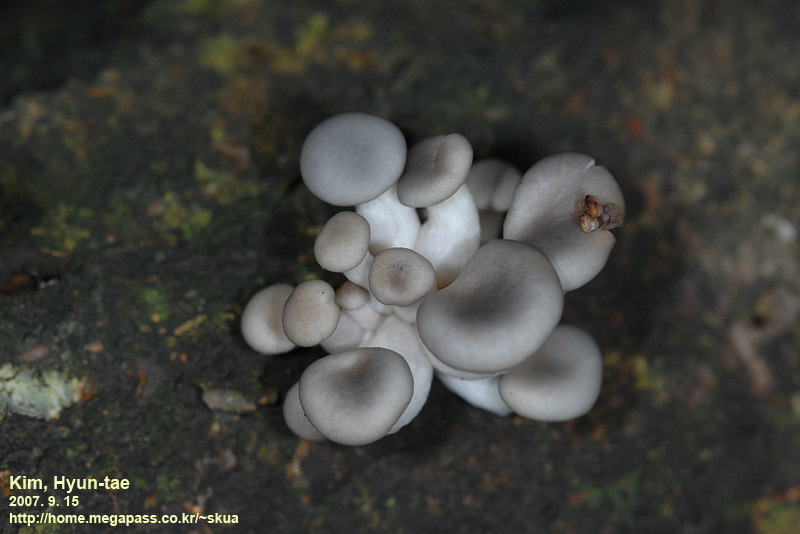
Several of the best edible wild mushrooms grow exclusively on trees, and their tree-growing habit makes them easier to identify than ground-dwelling species. Chicken of the Woods (Laetiporus sulphureus) is a bright orange-yellow shelf fungus with a pore surface — virtually unmistakable on hardwoods. Lion's Mane (Hericium erinaceus) forms cascading white spines resembling a waterfall — no look-alikes are dangerous. Oyster mushrooms (Pleurotus ostreatus) grow in overlapping fan-shaped clusters on dead hardwood, have white to cream decurrent gills, a white spore print, and a pleasant anise-like smell. Hen of the Woods (Grifola frondosa) forms large rosettes of overlapping grey-brown caps at the base of oaks. For each of these, the combination of host tree and structural features (pores, spines, or gill type) provides a reliable confirmation path.
Dangerous Tree Mushrooms to Know
While tree-growing mushrooms are generally safer than ground-dwelling species (the deadly Amanita genus grows from soil, not wood), several tree-dwellers can cause serious illness. The Jack O'Lantern (Omphalotus olearius) grows in clusters from buried wood or at the base of stumps — it has blade-like gills (not pores), a bright orange colour, and causes severe vomiting and diarrhoea. It is the most commonly confused species with chanterelles, though chanterelles grow from soil, not wood. Deadly Galerina (Galerina marginata) grows on decaying wood as small brown mushrooms with a ring on the stem — it contains lethal amatoxins. Sulphur Tufts (Hypholoma fasciculare) grow on stumps and are toxic.
What the Growth Pattern Tells You
How a mushroom grows on a tree provides identification clues beyond just the species. Saprotrophic fungi (decomposers) grow on dead wood — fallen logs, dead standing trees, and stumps. These include oyster mushrooms, turkey tail, and most bracket fungi. Parasitic fungi grow on living trees and are actively killing the host — honey mushrooms (Armillaria) are aggressive tree parasites. Some species are facultative parasites, meaning they can grow on both living and dead wood. The location on the tree matters too: fungi growing at the base near the root flare (like Hen of the Woods and honey mushrooms) may indicate root rot. Fungi high on the trunk suggest heartwood decay. Fungi on branches suggest the tree is dying from the canopy down.
Assessing Tree Health Through Mushroom Growth
Finding mushrooms on a living tree is almost always a sign of internal decay, and the species present can indicate the severity. Turkey Tail and other thin polypores on dead branches are natural recyclers and not cause for concern on a living tree. However, large bracket fungi (like Ganoderma or Laetiporus) growing from the main trunk indicate significant heartwood decay that may compromise structural integrity. If you find large conks on a tree near a house, walkway, or play area, consult an arborist — the tree may be at risk of catastrophic failure. Honey mushroom (Armillaria) at the base of a tree indicates active root rot, which is the most dangerous condition for structural stability.
Seasonal Patterns for Tree Mushrooms
Many tree-growing species have predictable fruiting seasons that aid identification. Dryad's Saddle (Cerioporus squamosus) is one of the earliest, appearing in late spring (May to June). Chicken of the Woods fruits from late spring through autumn with peak season in summer. Hen of the Woods (Grifola frondosa) is primarily an autumn fruiter, appearing September through November at the base of oaks. Oyster mushrooms fruit in autumn but can also appear during winter warm spells — they are one of the few mushrooms that tolerate frost. Lion's Mane fruits from late summer through autumn. Knowing the season helps Dr. MycoTek prioritize candidates when multiple species are plausible.
Photographing Tree Mushrooms for Identification
When photographing a tree mushroom, capture: the mushroom from above and below (the pore or gill surface is critical), the mushroom in relation to the tree trunk (showing how far up the trunk it grows and whether the tree appears alive or dead), a close-up of the tree bark (which helps identify the host tree species even without leaves), and the overall size with a reference object. For bracket fungi, note whether the bracket is annual (soft, fleshy) or perennial (woody, with visible growth rings on the cross-section). If possible, note whether the tree is alive or dead, and whether other mushrooms are growing nearby — many species fruit in groups or in association with other fungi.
What You Get
See It In Action

Real photos from the community
Commercial-use Creative Commons photos from Mushroom Observer.


Frequently Asked Questions
Related Topics
Put this guide into practice
Keep a useful record while the details are fresh.
Your records stay useful on their own; AI help is optional.
Start with a photo. No account needed until you want to save or publish your record.